

Layer 1: The chemistry
This is perhaps one of the most crucial elements. If the chemistry inside the battery is not right, it will not only be ineffective, but dangerous as well. Different chemistries are better suited for specific environments. For instance, automotive grade battery cells deliver extreme temperature resilience and high energy density, which makes them well-suited to environments that rely on these characteristics.
Layer 2: Charging capacity
Once you are satisfied with the chemistry, you need to ensure that the battery chosen has the right capacity insurance. This is to provide the ability to support the charging required and remain within the 48-volt paradigm critical for renewable energy.
Layer 3: Well-designed box
The battery cells must obviously be of the highest grade. The chemistry means little if the battery is not constructed correctly. The physical box must be rugged while the connections to the cells for monitoring and power delivery must be solid. The battery must have a well-designed box that can take shocks.
Layer 4: Safety
The final part is ensuring the battery does not leak or explode. The safety specification of the battery you choose is an important consideration. Chemical devices need to be designed and stored correctly as this speaks directly to their safety.
A lithium battery, for instance, features a battery management system (BMS) that monitors and shuts down the battery if something goes wrong. There are also physical signs to check out as well such as whether the battery is misshapen or has water marks on it.
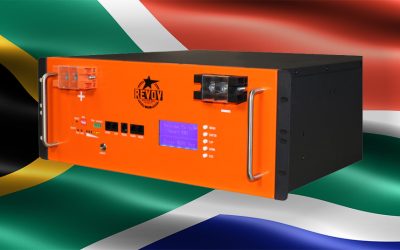
Best Lithium Battery in South Africa: What to Consider
Not all lithium batteries are the same. When you’re looking for the best lithium battery in South Africa, there are many factors to consider – from chemistry and cell quality to safety and environmental considerations. Here, we outline what to consider when choosing...
What You Need for an Off-Grid Solar System in South Africa
If you need power in a remote area or have simply had enough of South Africa’s fractured national grid, an off-grid solar system is what you need. South Africans who want to produce their own power can use solar panels to generate electricity and a lithium-ion battery...
The value of a 16-cell VS 15-cell LiFeP04 battery configuration
Part of a solar/UPS (uninterrupted power supply) system is the batteries that are used to store the energy from either solar panels, or the grid so it can be used when other power sources are not present, or not sufficient. Among the different LiFeP04 pack...
Recent Comments